Virtual Reality Games to Teach Autistic Children
Motivation
- Hard skills to practice. Taking turns and asking for things out loud are core social skills, and for many autistic children the difficulty persists even after years of therapy.
- The children left out. Most research on virtual reality for autism studies adults, adolescents, or children with Level 1 autism, who already respond to traditional therapy. Children with moderate-to-severe autism, for whom traditional approaches often fail, are rarely studied.
- One design for everyone. Most VR interventions are designed once and never adapted, while applied behavior analysis (ABA), the standard therapy, adjusts to each child's interests and needs.
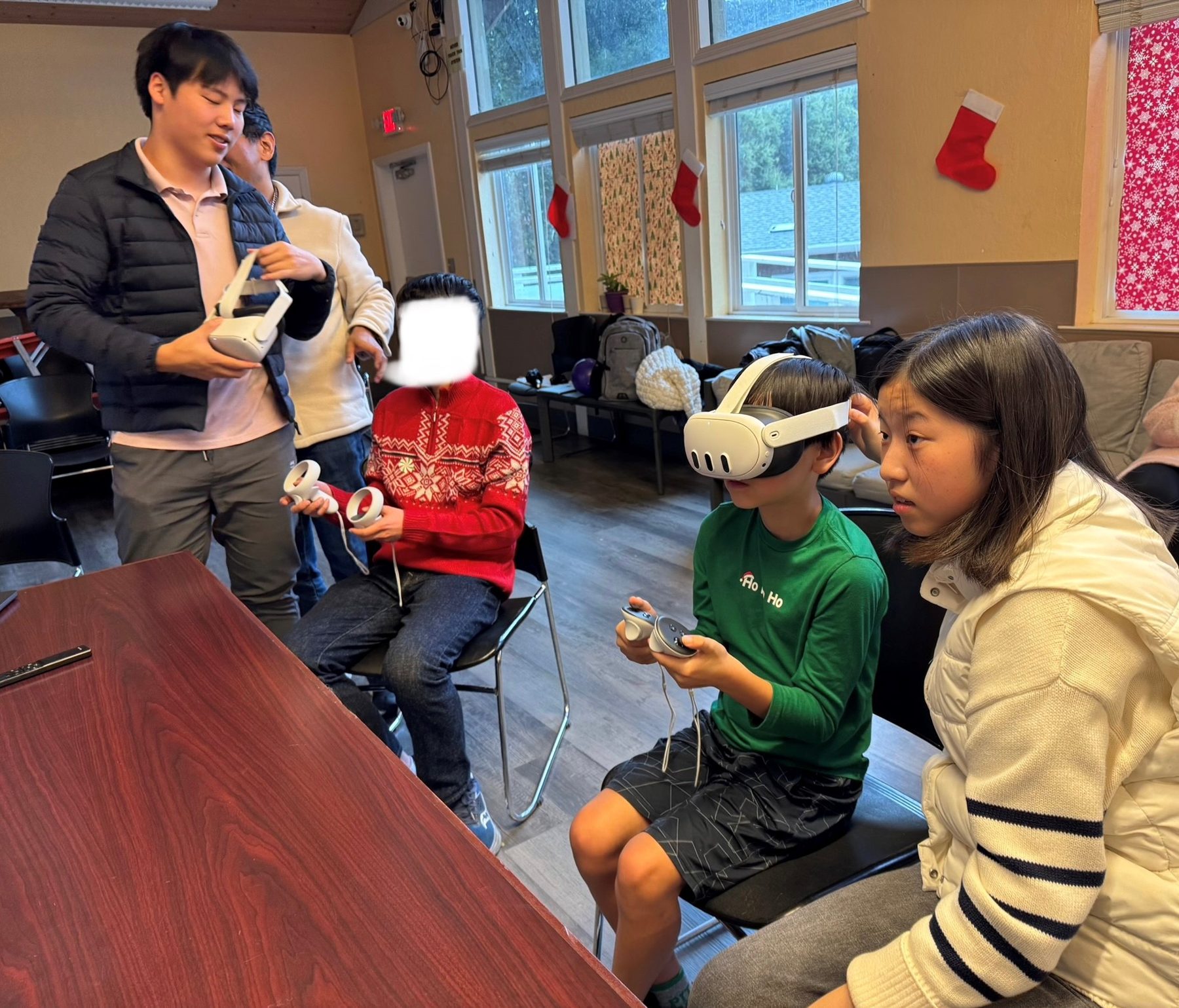
What I built
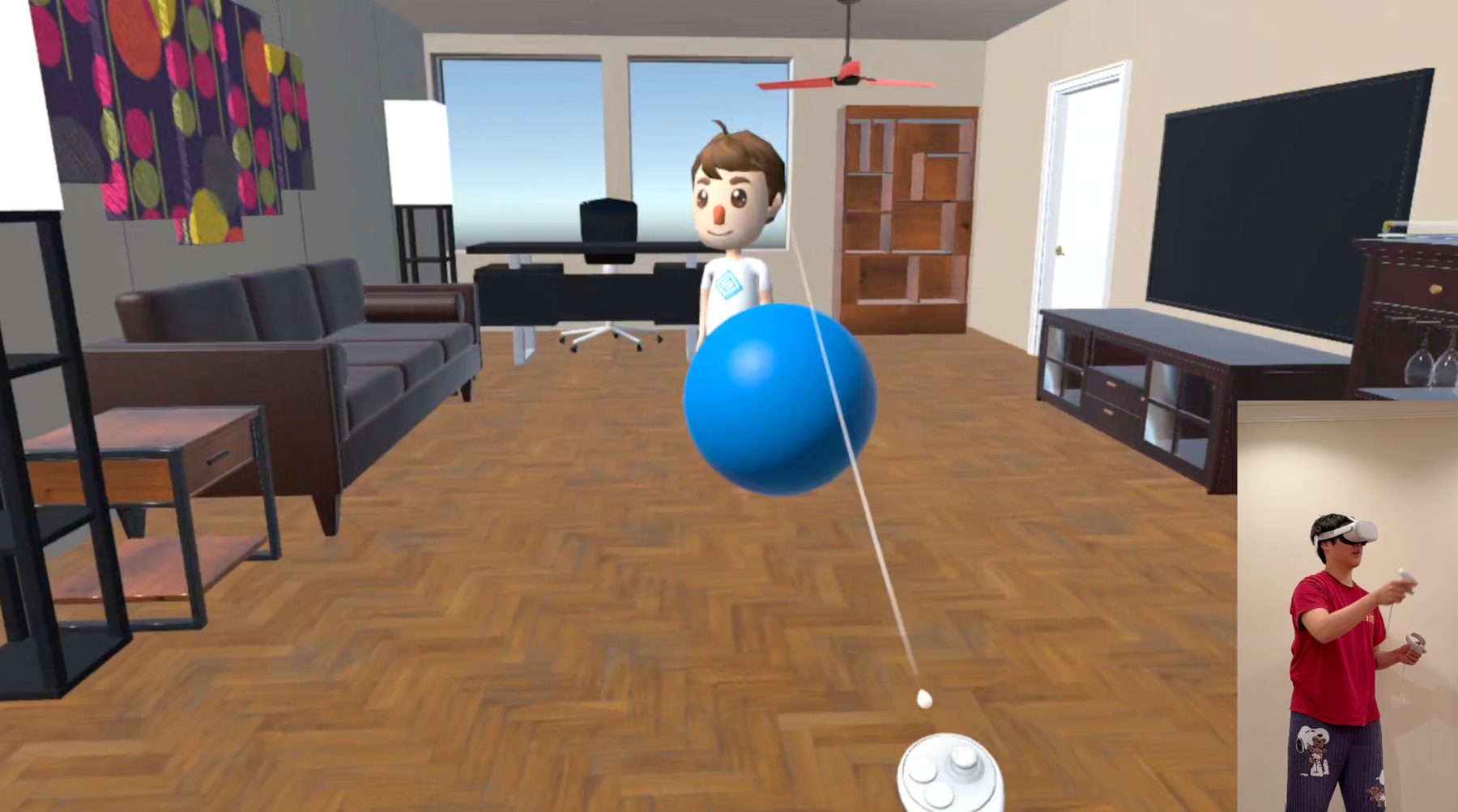
The Ball Game. Turn-taking. The player throws a ball back and forth with a virtual peer, by grabbing the ball or, for children who struggle with fine motor control, by clapping to receive and giving a thumbs-up to send. 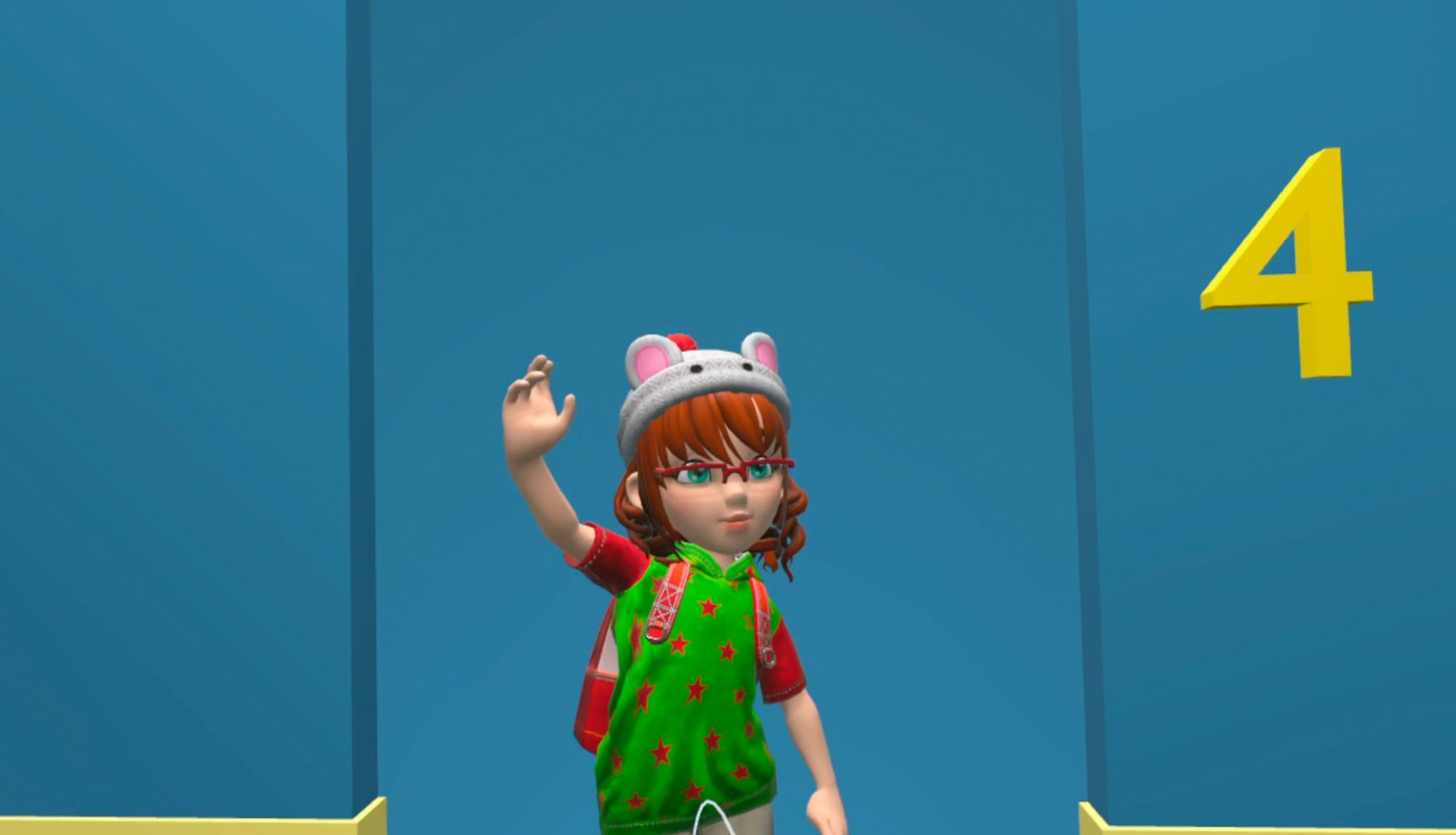
The Elevator Game. Spontaneous verbal requesting. The child has to ask out loud, unprompted, to make the elevator go. Ten children who played it showed gains in unprompted requests.
Design
- Built in Unity 3D with OpenXR for the Meta Quest 3 headset
- Each game follows ABA's antecedent, behavior and consequence structure
- Rewards tuned to each child: praise, sounds, even a spinning ceiling fan
- Several virtual settings, such as an apartment and a playground, so the skill carries over
- Gameplay mirrored to a television so a therapist or parent can watch and prompt
- Revised after every one or two sessions, based on feedback from caregivers and therapists
Testing
- Ball Game tested with five children with Level 2 autism, at home with a caregiver
- Four of the five reached the turn-taking goal; one withdrew because of sensory overload
- Elevator Game played by ten children, with gains in unprompted requests
Camps and events
- Free virtual reality sessions. At Friends of Children with Special Needs and Camp Via West since March 2025, for more than 100 participants. Both organizations hold a no-cost license to the system.
- Summer camp. Six weeks of free care for 25 autistic children aged 10 to 17.
- Winter camps and a Halloween party. Bay Area Friendship Circle, Camp Via West, and Friends of Children with Special Needs, with a team of six volunteers.
- CalABA 2025. Presented the poster below at the California Association for Behavior Analysis Conference.
- IC4e 2026. Presented the turn-taking study at Kyushu University in Fukuoka, Japan, April 2026.
The policy end
The children who play these games become adults, and the support they get at school stops. I am working on a legislative proposal about that end of it, with the staff of the senator's office where I intern. More on the Policy page.
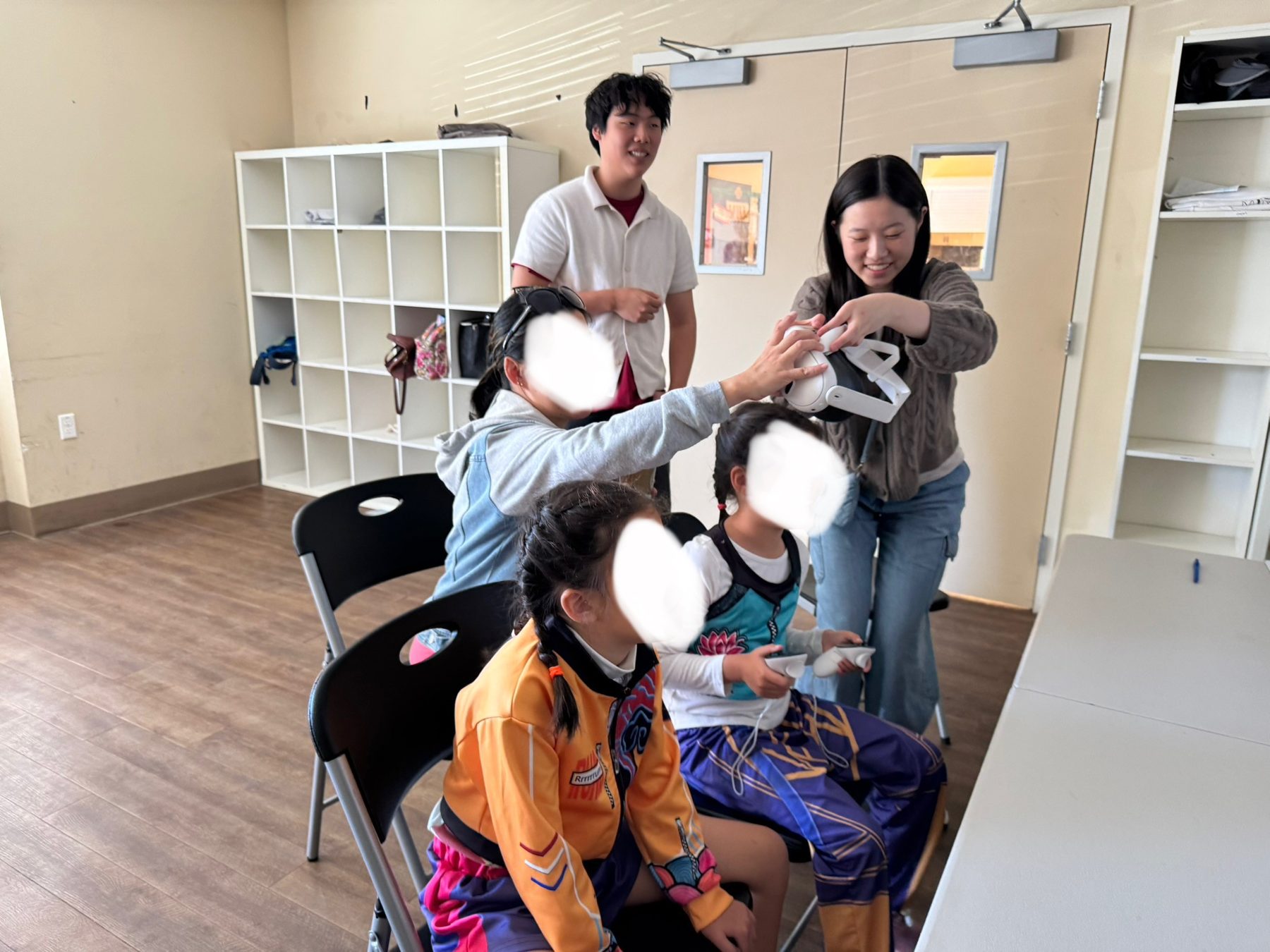
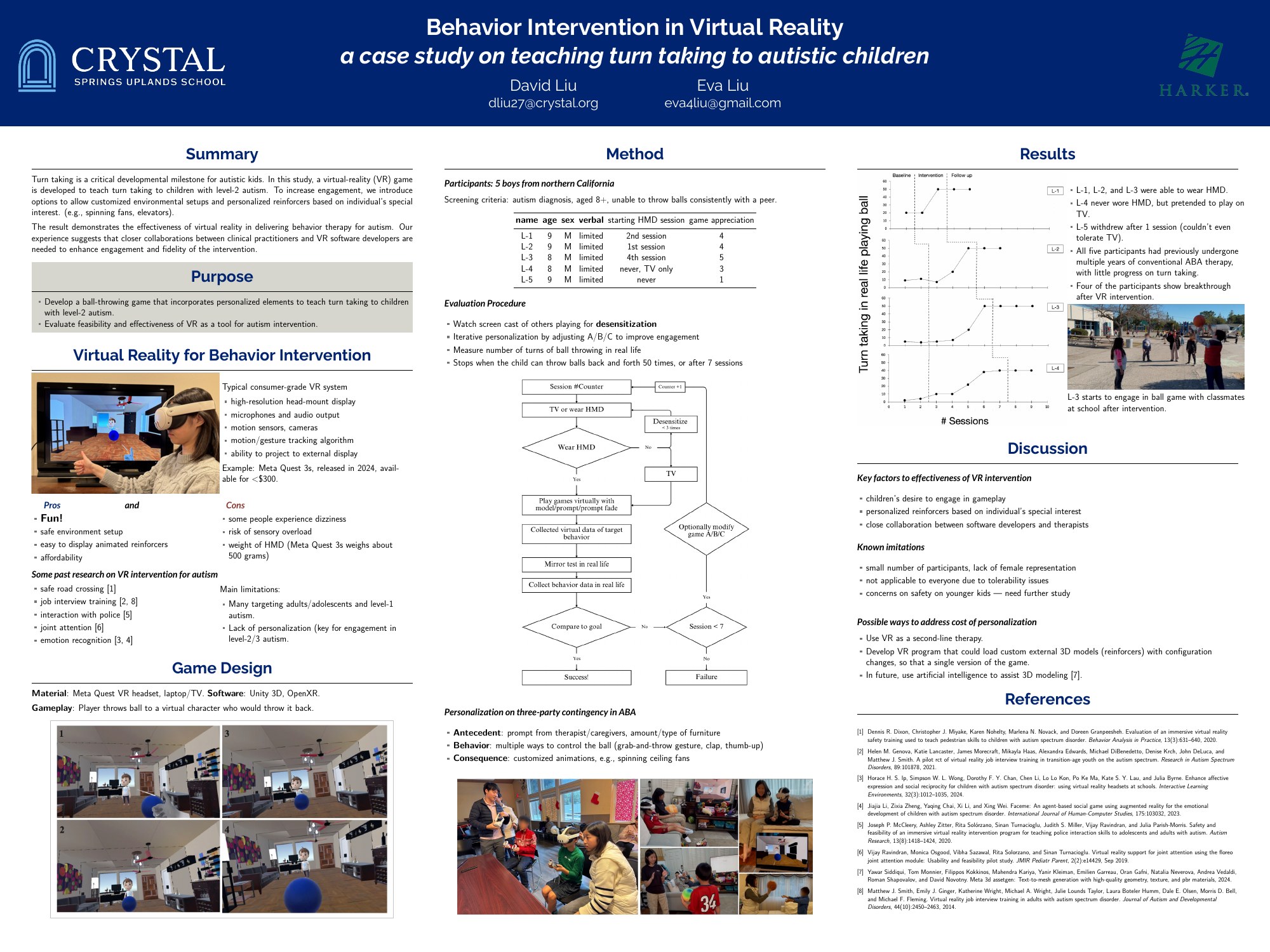
Behavior Intervention in Virtual Reality: A Case Study on Teaching Turn Taking to Autistic Children
Publication, patent and awards
- Paper. D. Liu and E. Liu, "Teaching Turn Taking to Autistic Children Using an Individualized Virtual-Reality Game." 2026 17th International Conference on E-Education, E-Business, E-Management and E-Learning (IC4e), IEEE, 2026. IEEE Xplore
- Patent. "AI-Assisted Virtual Reality System and Method for Autism Spectrum Disorder Intervention." US patent, approved; filed August 18, 2025, as application 19/303,267; first named inventor. Covers both games.
- Davidson Fellows Scholarship, Honorable Mention, Technology category, 2026: one of 20 projects nationwide. 2026 Davidson Fellows
- American Psychological Association, Certificate of Award for Achievement in Research in Psychological Science, Alameda County Science & Engineering Fair, 2025.
- Highest award given in the Behavioral and Social Sciences category, Alameda County Science & Engineering Fair, 2025.