Two Games for the Children Traditional Approaches Fail.
Founder, TWINKLEPLUS Inc. · Co-Founder, TWINKLELINK · First Author, IEEE IC4e 2026
David Liu builds virtual reality games for children with moderate to severe autism. He co-founded TWINKLELINK, a nonprofit that runs camps and events for autistic children, in December 2023, and in November 2024 set up TWINKLEPLUS Inc., a California corporation, to hold the software. The nonprofit came first, and the games came out of it.
Between July 2024 and March 2025 he designed, built and evaluated two games structured on applied behavior analysis. The Ball Game teaches turn-taking. The Elevator Game teaches asking for something out loud without being prompted. He now runs free sessions with them at Friends of Children with Special Needs and Camp Via West, two organizations that hold a no-cost license to the system behind them.
In the future, David hopes to keep the games in front of the children who can use them, and to work on the other end of the problem: what an autistic adult can count on once school support stops.
The turn-taking study, published
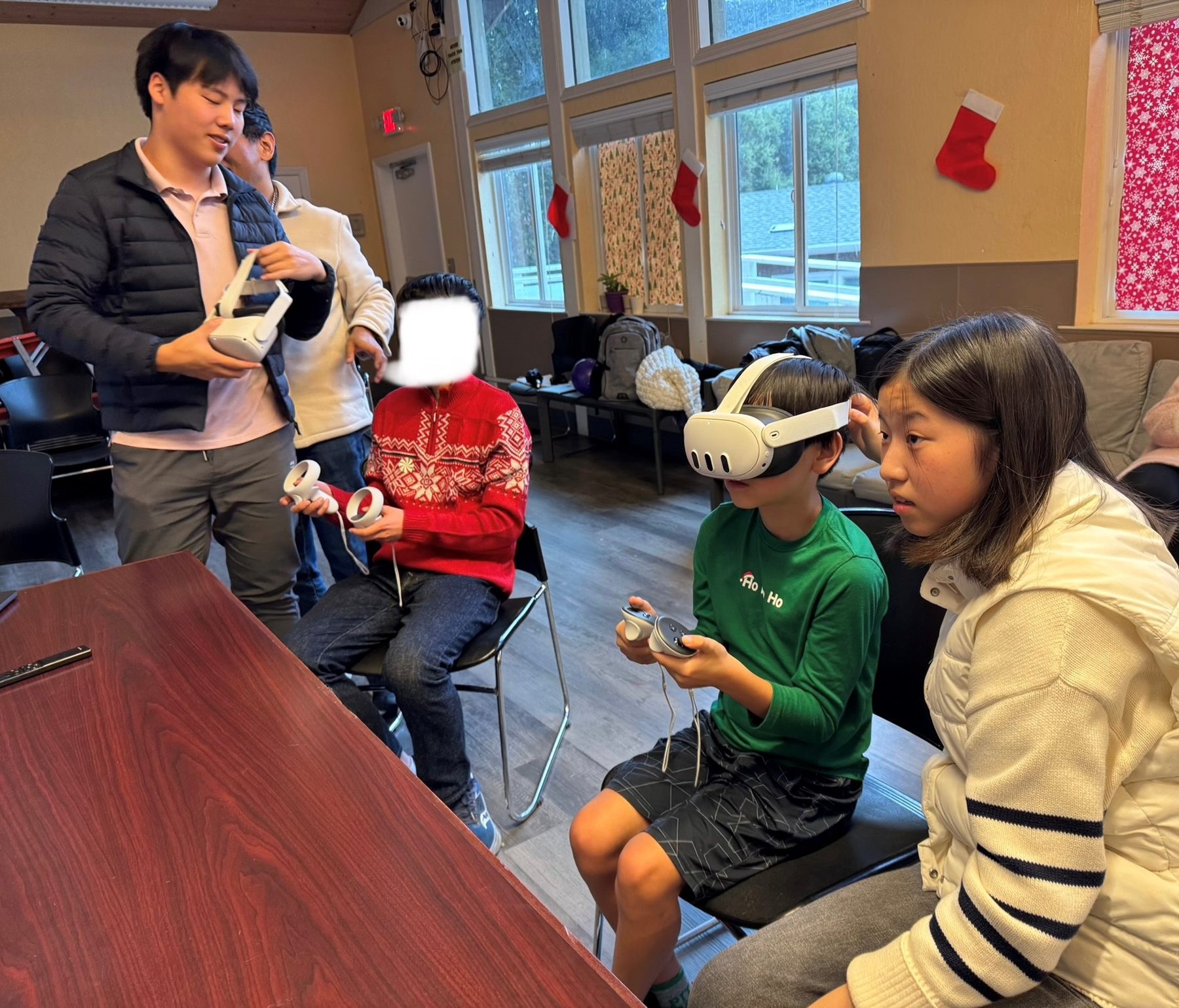
The Ball Game simulates throwing a ball back and forth with a virtual peer. It was evaluated with five children with Level 2 autism, each in their own home with a caregiver present, on a Meta Quest 3 headset mirrored to a television so an adult could watch and prompt. Four of the five reached the study's turn-taking goal; one withdrew because of sensory overload. Each child's rewards, the praise, the sounds, even a ceiling fan that spins, were tuned to that child.
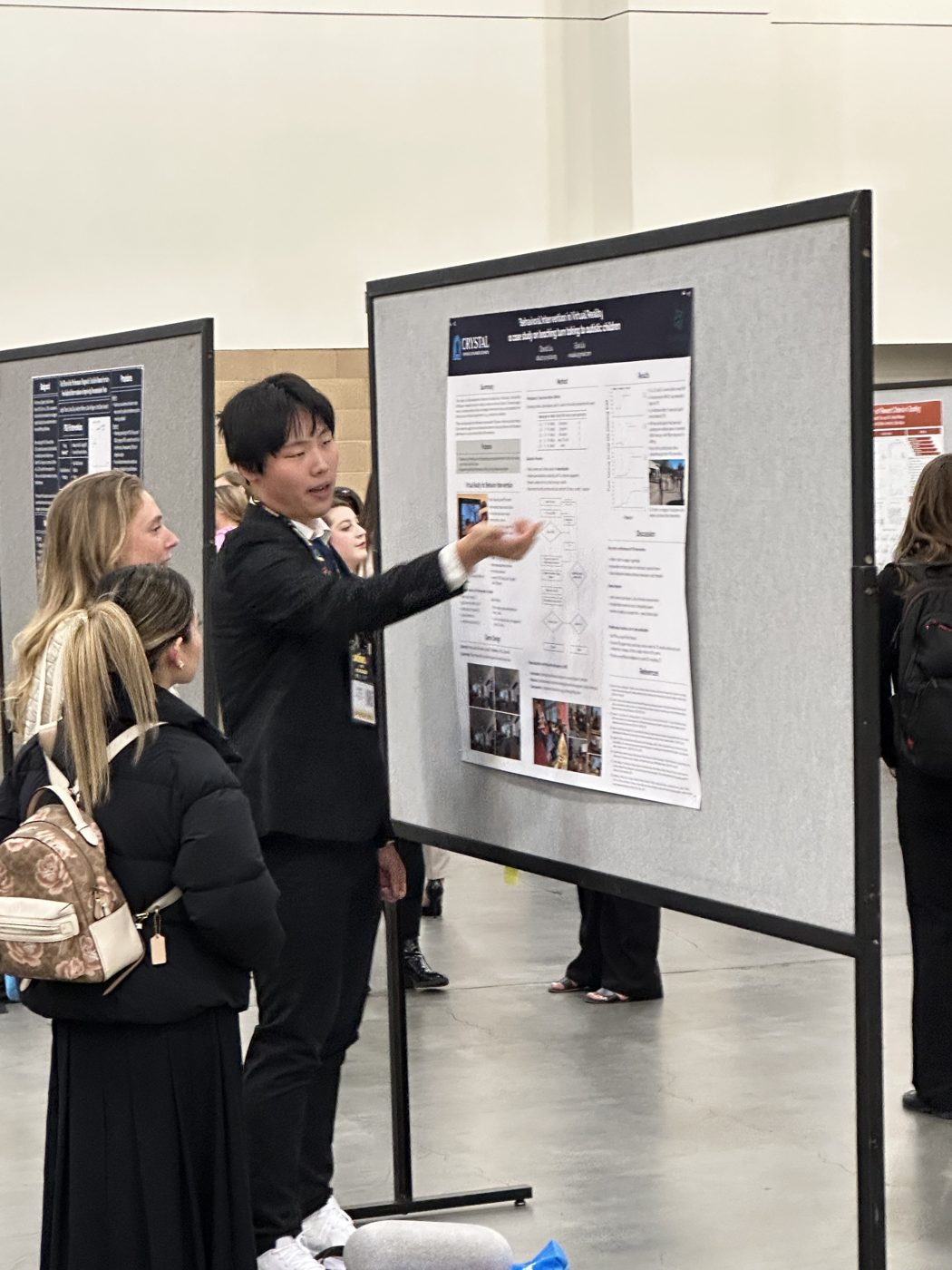
The paper, written with co-author Eva Liu, was presented at the 17th International Conference on E-Education, E-Business, E-Management and E-Learning (IC4e 2026) at Kyushu University in Fukuoka, Japan, on 1 to 4 April 2026, and published by IEEE in August 2026.
Our experience indicates that the individualized approach in the iterative design flow is the key to our success. This calls for closer collaborations between software developers and therapists in the design of such VR-based interventions.From the paper's abstract
-
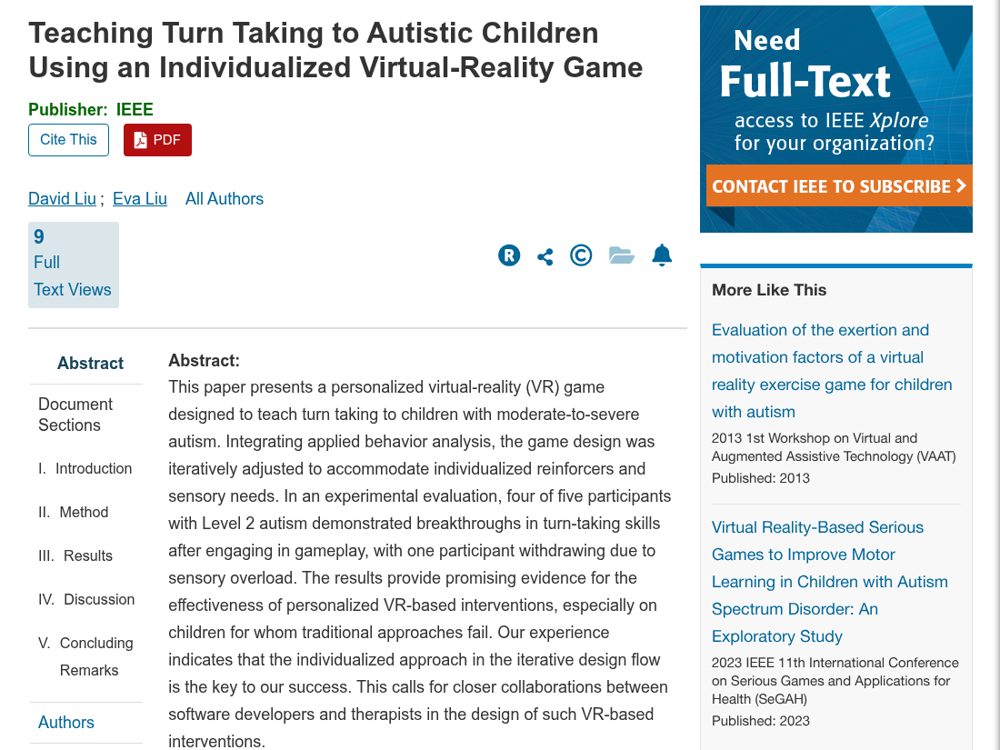
Teaching Turn Taking to Autistic Children Using an Individualized Virtual-Reality Game
-
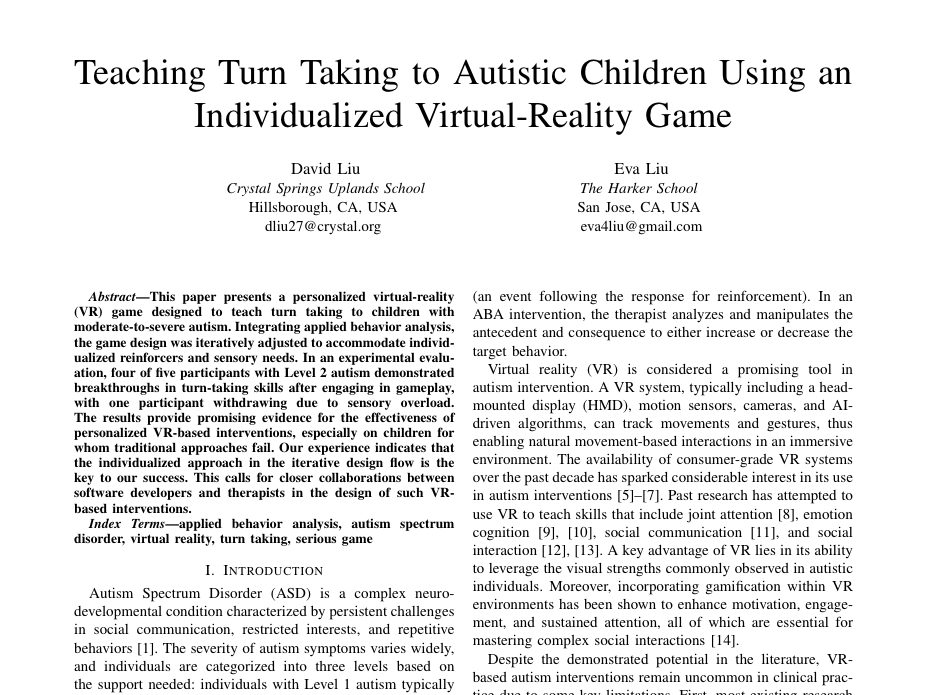
The paper itself
The two games
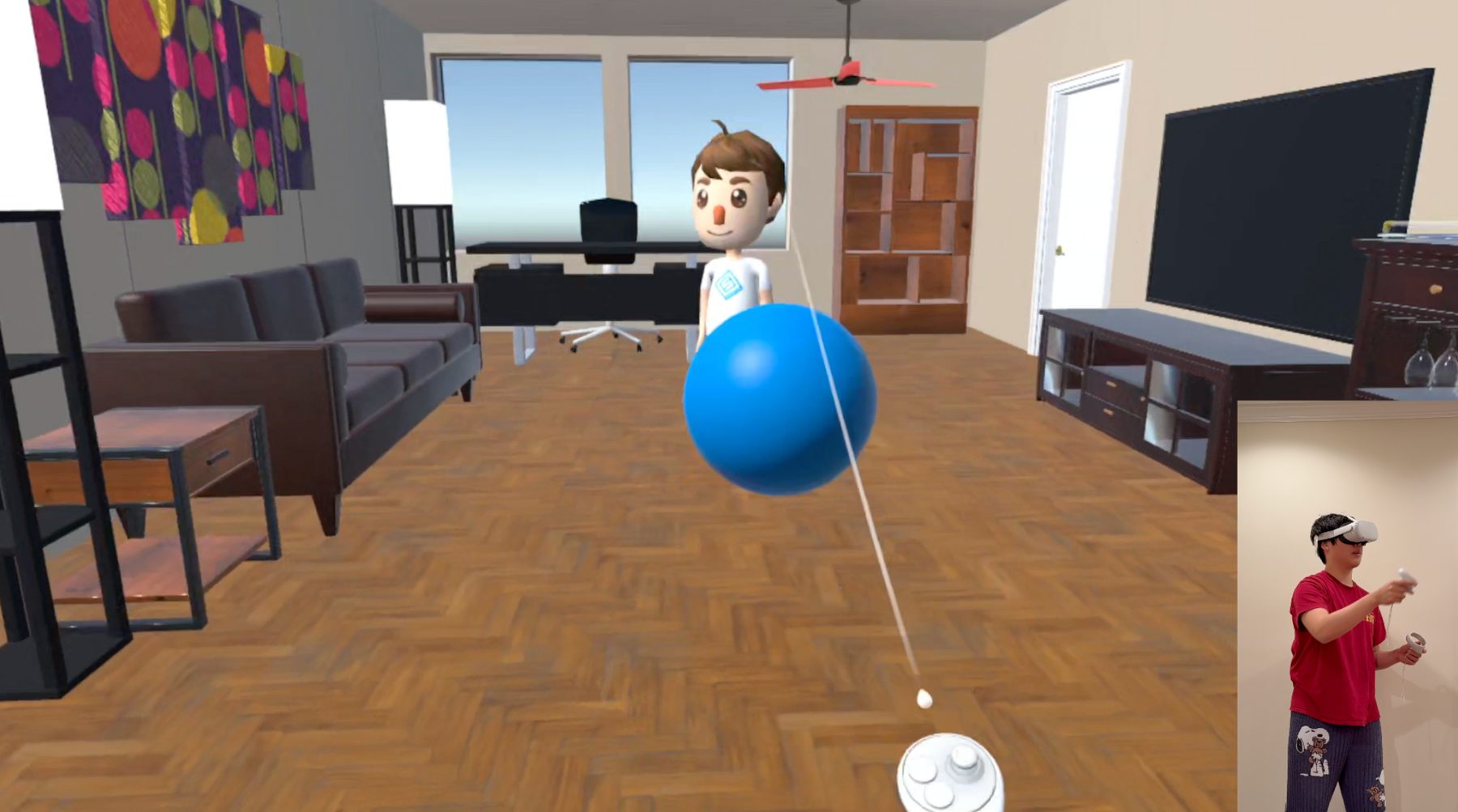
The Ball Game. Turn-taking. The player throws to a virtual peer by grabbing the ball or, for children who struggle with fine motor control, by clapping to receive and giving a thumbs-up to send. 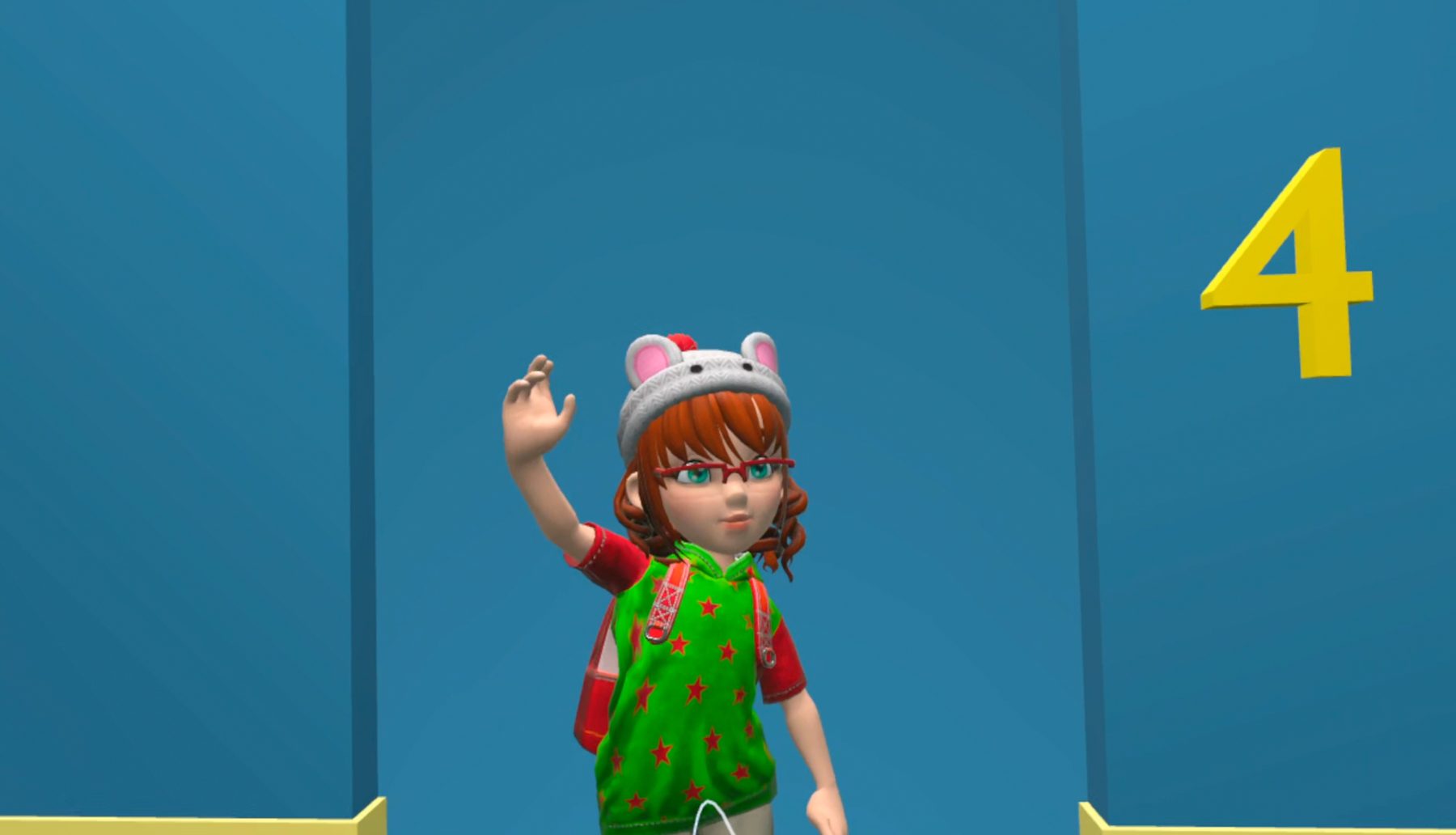
The Elevator Game. Spontaneous verbal requesting. The child has to ask out loud, unprompted, to make the elevator go. Ten children who played it showed gains in unprompted requests.
The patent application
On 18 August 2025 TWINKLEPLUS Inc. filed United States patent application 19/303,267, "AI-Assisted Virtual Reality System and Method for Autism Spectrum Disorder Intervention", with David as first named inventor and a request for prioritized examination. The application is pending. The system it covers is licensed free of charge to special-needs nonprofits, among them the two where the games are used with children.
Camps and events
The software is only worth the room it is used in, so most of the nonprofit's work is the room.
- TWINKLELINK summer camp. Six weeks of free care for 25 autistic children aged 10 to 17.
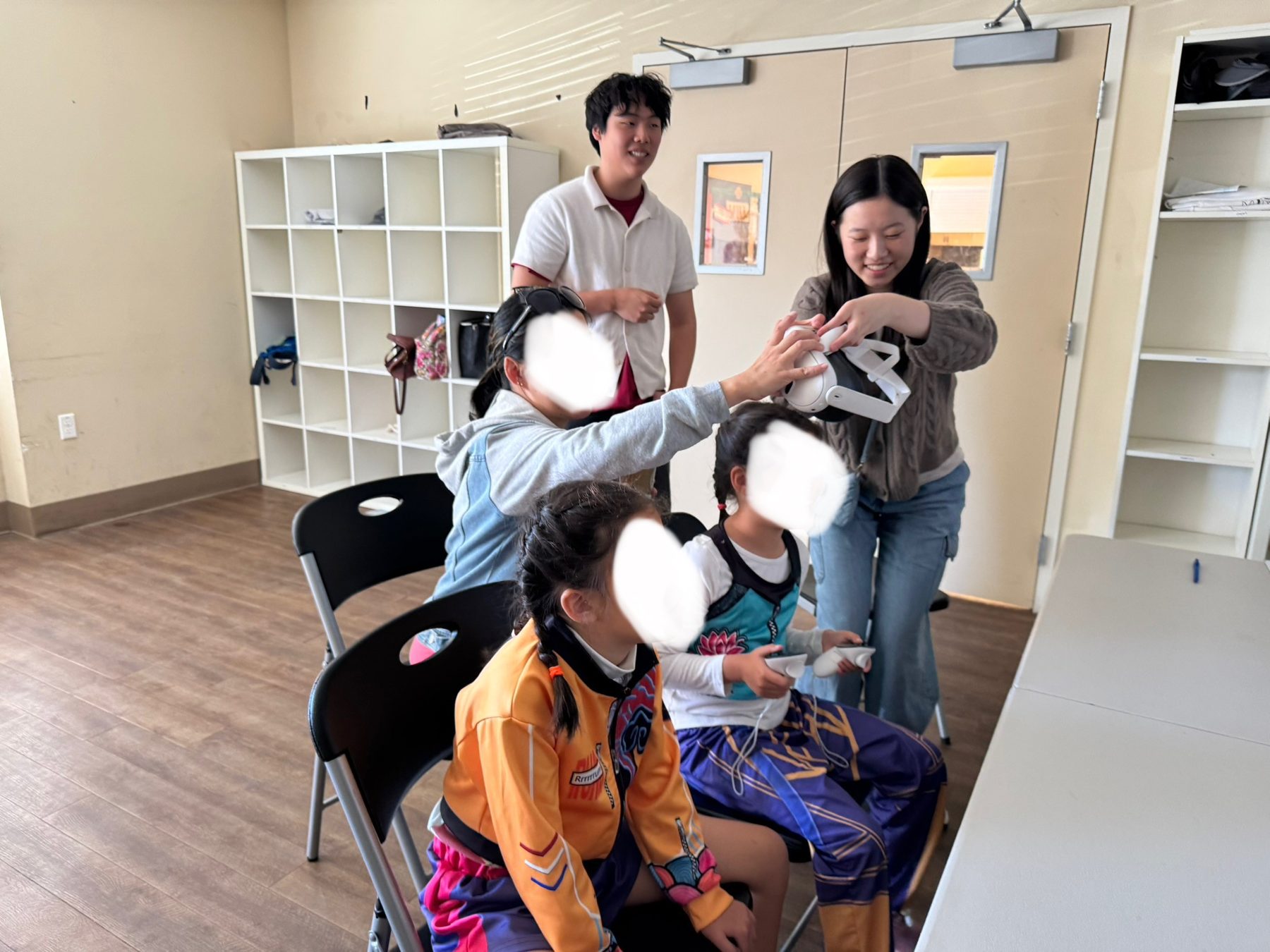
- Free virtual reality sessions. Taught at Friends of Children with Special Needs and Camp Via West since March 2025, to more than 100 participants.
- Winter camps and a Halloween party. Bay Area Friendship Circle, Camp Via West and Friends of Children with Special Needs, with a team of six volunteers.
Recognition
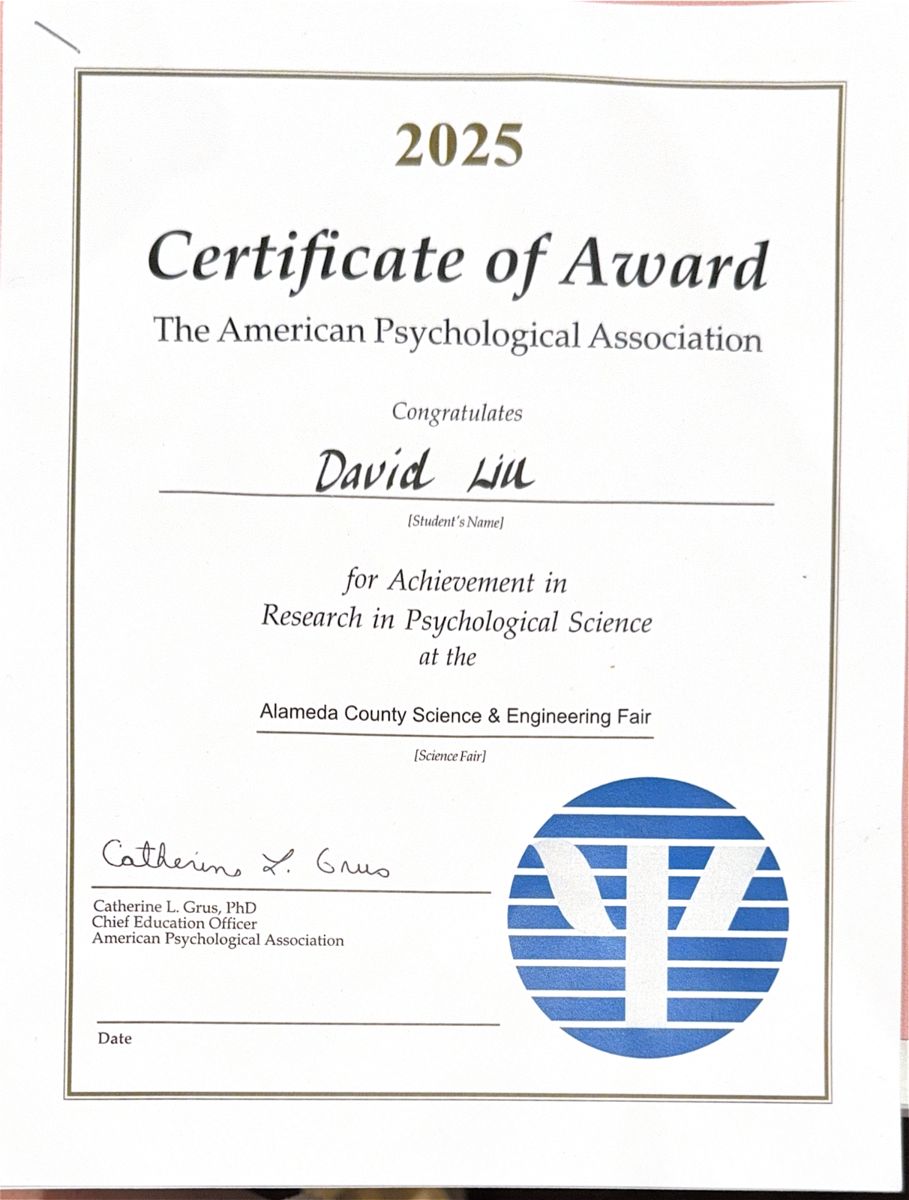
- American Psychological Association, Certificate of Award for Achievement in Research in Psychological Science, at the Alameda County Science & Engineering Fair, 2025.
- First place in category, Alameda County Science & Engineering Fair, 2025.
- First place in category, Junior Science and Humanities Symposium, Northern California, 2025.
The policy end
The children in these games become adults, and the support they get at school stops. David is working on a legislative proposal about that end of it, with the staff of the senator's office where he interns. More on the Policy page.