Math Literacy of Neurodiverse Children
Independent study, June to December 2025 · Sole author
The starting point was the gap in educational outcomes for children with special needs in a region where resources are assumed to be abundant. Rather than borrow a questionnaire, I wrote one, built on the PISA framework for mathematical literacy, and reached families through parent groups, regional disability networks, and autism-focused forums. Responses were analyzed with descriptive statistics and cross-tabulation; the composite measure of students' mathematics experience had a Cronbach's alpha of 0.85.
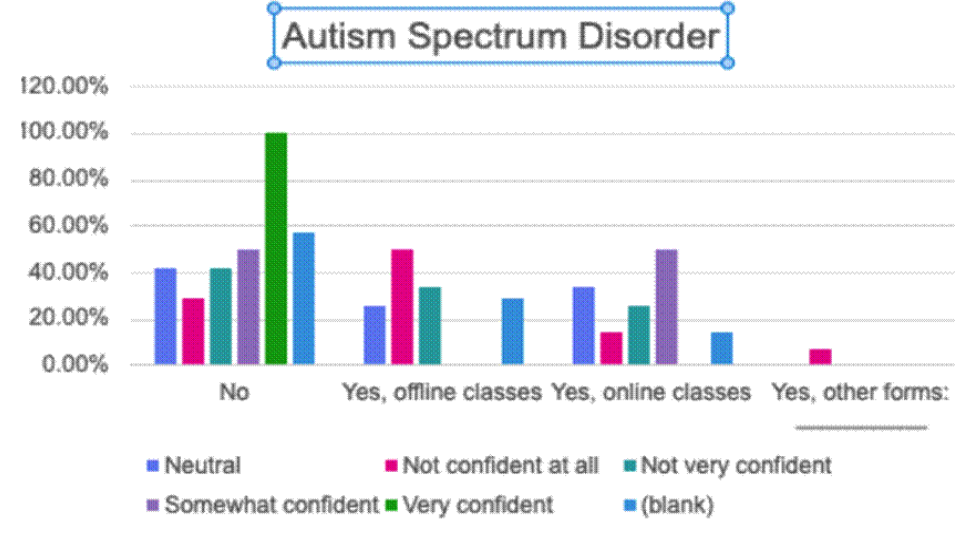
What came back was blunt. Only 1.6 percent of respondents said they had never felt discouraged or anxious about mathematics because of their disability. Students with anxiety, attention difficulties or low confidence were two to three times as likely to call mathematics stressful or hard to focus on. Students with ADHD-like attention profiles were the most enthusiastic about hands-on and immersive learning, with more than 85 percent saying they learn better with movement or immersive tools; students with anxiety wanted private, self-paced practice and one-on-one feedback rather than public questions. The paper pairs each finding with an intervention a school could actually run, and closes with its own limits: a voluntary sample of 108 and self-reported diagnoses.
The survey and the virtual reality games are the same project seen from two sides: two of the survey's closing questions ask whether a student would find mathematics taught through VR interesting, and whether they would practice with it at home.